Guides
Equipment a handyman business cannot open without for 2027
The named hand tools, ladders, power drill, safety gear and diagnostic tools a handyman van needs in 2027, plus how to decide what earns a slot.
What to take away
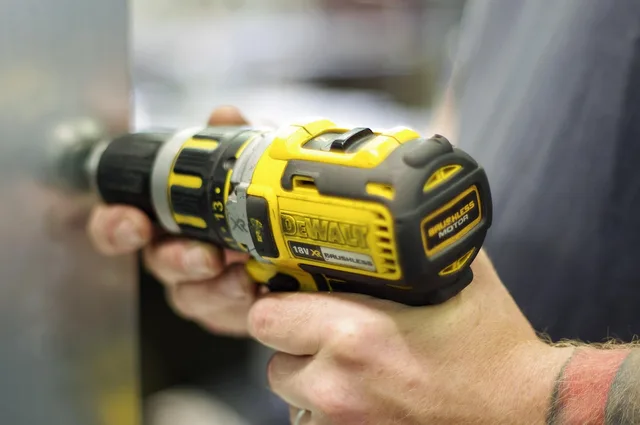
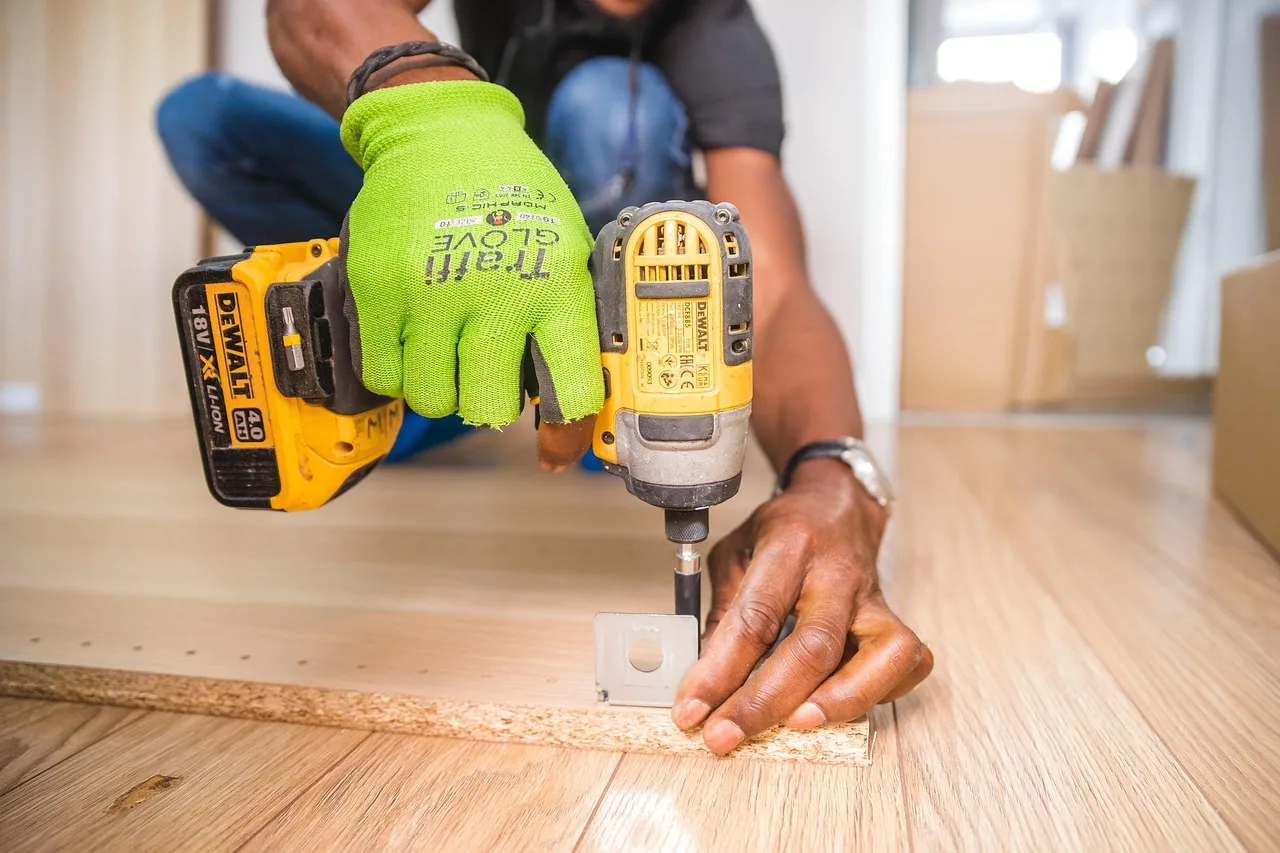
- Equipment a handyman business cannot open without for 2027 starts with a DeWalt DCD777 20V MAX drill and a Milwaukee M18 Fuel 2853-20 impact driver. Both use 18V nominal batteries.
- Add a Makita XMT03Z 18V LXT oscillating multi-tool and a Milwaukee 2719-20 M18 Fuel Hackzall for flush cuts and one-handed demolition.
- A DeWalt DWE6423 5 in random orbital sander, a Stanley PowerLock 25 ft tape and a Stabila 196-2 48 in level cover finish work and layout.
- Climb with a Werner NXT1A06 6 ft A-frame ladder and a Werner D6200-2 28 ft extension ladder. Both are Type IA, 300 lb rated.
- Protect yourself with a 3M 6502QL P100 respirator, 3M SecureFit SF400 safety glasses and a First Aid Only 298-piece kit.
- Diagnostic tools include a Klein NCVT-3P voltage tester, a Klein RT250 GFCI tester, a Klein MM400 multimeter and a Franklin Sensors ProSensor M210 stud finder.
- A DeWalt DXV05P 5-gallon wet/dry vacuum handles debris and water.
- Van volume and retrieval time bind harder than budget. A tool you cannot reach in twenty seconds is not really in the van.
- A tool earns its slot on how often you reach for it multiplied by what a missing tool costs you. The second number is the one owners skip.
- Ladder, respiratory and eye protection are set by OSHA, not by preference. Check the current rule before you load.
- Consumables leave the van silently. Written minimums plus one restock trip a week stop the second visit.
The 2027 opening kit, by brand and model
This is what a one-person handyman outfit can open with in 2027. Each item is here because it covers a category of task you will be asked for in the first month. Prices are typical street prices as of 2026.
The 2027 opening kit
| Item | What it does | Why it is on the list |
|---|---|---|
| DeWalt DCD777 20V MAX drill/driver | Drives and removes fasteners, bores holes; 1/2 in chuck; bare tool typically $99-$129 | Nothing else hangs a shelf, a bracket or a curtain rod |
| Milwaukee M18 Fuel 2853-20 impact driver | Drives long fasteners; 1,800 in-lb torque; bare tool typically $149-$179 | Pairs with the drill on one 18V battery platform |
| Makita XMT03Z 18V LXT oscillating multi-tool | Cuts flush in tight spots; 3.2 degree oscillation; bare tool typically $99-$139 | The only tool that reaches a door jamb or a cut nail |
| Milwaukee 2719-20 M18 Fuel Hackzall | One-handed reciprocating saw for wood, PVC and metal; bare tool typically $149-$179 | Demolition, pipe work, pruning |
| DeWalt DWE6423 5 in random orbital sander | Flattens patches and trim; 8,000 to 12,000 OPM; typically $79-$99 | Paint and drywall repairs fail without it |
| Stanley PowerLock 25 ft tape measure | Layout; 1 in blade; typically $15-$25 | Every hanging and alignment job |
| Stabila 196-2 48 in level | Plumb and level; typically $120-$180 | Every hanging and alignment job |
| Werner NXT1A06 6 ft A-frame ladder | Interior work at ceiling height; Type IA, 300 lb; typically $100-$140 | Light fixtures, smoke alarms, upper cabinets |
| Werner D6200-2 28 ft extension ladder | Exterior and roof-edge work; fiberglass Type IA; typically $400-$600 | Gutters, fascia, soffit |
| 3M 6502QL P100 respirator | Dust and particulate protection; quick latch; typically $30-$45 | Required for cutting, sanding and demo |
| 3M SecureFit SF400 safety glasses | Eye protection; typically $10-$20 | Required for cutting, sanding and demo |
| First Aid Only 298-piece first aid kit | Cuts and abrasions; refillable; typically $25-$40 | You work alone |
| DeWalt DXV05P 5-gallon wet/dry vacuum | Debris and water pickup; 4 peak HP; typically $99-$129 | Cleanup is part of the invoice |
| Klein NCVT-3P non-contact voltage tester | Detects AC voltage from 12 to 1000V; typically $25-$40 | Diagnostic before touching wiring |
| Klein RT250 GFCI receptacle tester | Tests GFCI and wiring faults; typically $25-$35 | Diagnostic for outlets |
| Klein MM400 digital multimeter | Measures voltage, continuity and resistance; typically $50-$70 | Diagnostic for circuits |
| Franklin Sensors ProSensor M210 stud finder | Finds studs through drywall; 13 sensors; typically $60-$80 | Hangs shelves and cabinets |
Brands matter less than the battery platform. Pick one and stay on it, because batteries and chargers are the recurring cost, not the bare tools. DeWalt 20V MAX and Milwaukee M18 are separate platforms. Adapters exist, but they add bulk and another failure point.
The van is the constraint
Owners plan a kit as a shopping list and meet the real problem on a Tuesday: the tool is behind two others, in a bag, on the floor, and it is raining.
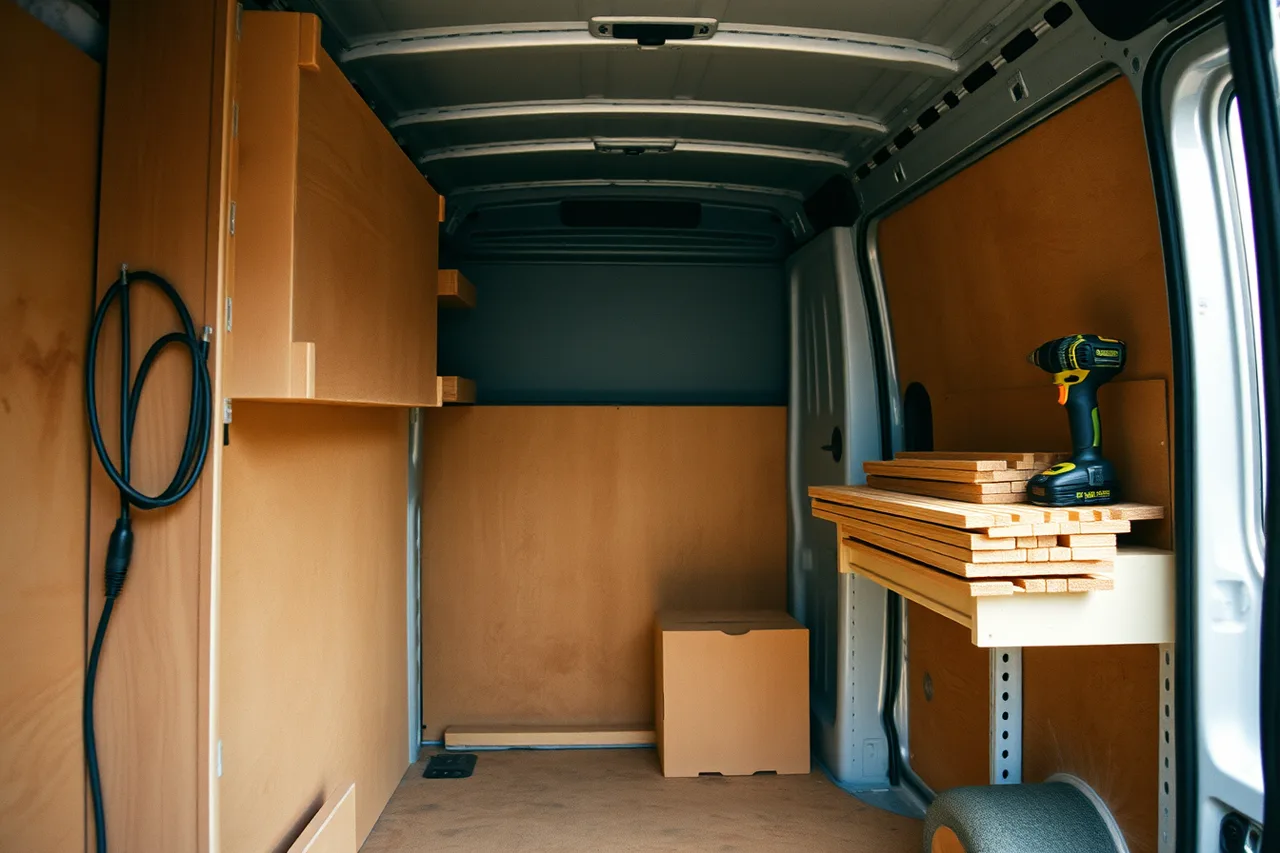
Retrieval time recurs on every job. It never shows in accounting and it is large in aggregate. Twenty most-used items reachable without moving anything else beats a bigger kit that is not.
Plan the space first. Decide how much of the load area is fixed storage, how much is staging for the current job, and how much is materials in transit. Then fit tools into fixed storage, ordered by how often you reach for them.
Anything that does not fit is a decision, not an oversight. Make it deliberately rather than by whatever was left in the bag.
What earns a slot
Score a candidate on two questions. How often is it reached for across the work you actually sell, not the work you might sell one day? If it has not been needed in the last thirty jobs, it is a rental or a refusal.
What does it cost to not have it? For most tools that is a supplier trip: the drive plus the lost slot. For a few it is the whole job, because nothing substitutes. Those few ride in the van regardless of frequency.
That is why a handyman kit looks unbalanced to an outsider. It carries low-frequency items that convert a failed visit into a finished one, and it leaves out tools a supplier trip can cover.
The service menu decides the list. Work out what you sell first: the kit follows from the services and packages you have committed to, and a kit built before that decision is both too large and missing things.
A $250 drain auger you use twice a year is a rental. A $250 impact driver you use twice a day is a purchase.
Four loading strategies
How it is organized
- Fixed racking, everything aboard
- Permanent shelving, one home per item
- Modular cases by job type
- Grab the case the job needs
- Core kit plus a daily load
- Permanent minimum, topped up from a stocked base
- Two-tier: van plus trailer
- Bulk items follow only when needed
Suits
- Fixed racking, everything aboard
- Broad service lists, unpredictable days
- Modular cases by job type
- Package work booked ahead
- Core kit plus a daily load
- Owners with a unit and a settled route
- Two-tier: van plus trailer
- Carpentry and exterior work
What goes wrong
- Fixed racking, everything aboard
- Heavy, slow to change, full before the business is
- Modular cases by job type
- Fails when a job turns out to be something else
- Core kit plus a daily load
- Needs a morning routine that survives being late
- Two-tier: van plus trailer
- Parking, maneuvering, a second thing to secure
The mistake is not choosing wrongly. It is drifting between two strategies, so half the van is racked and half is a pile of cases. Then nothing has a home and retrieval time climbs for everything.
Ladders and safety gear
Some equipment is aboard because of what could happen, not what is scheduled. Ladders and stabilizers, eye and hearing protection, dust control, a checked first aid kit.
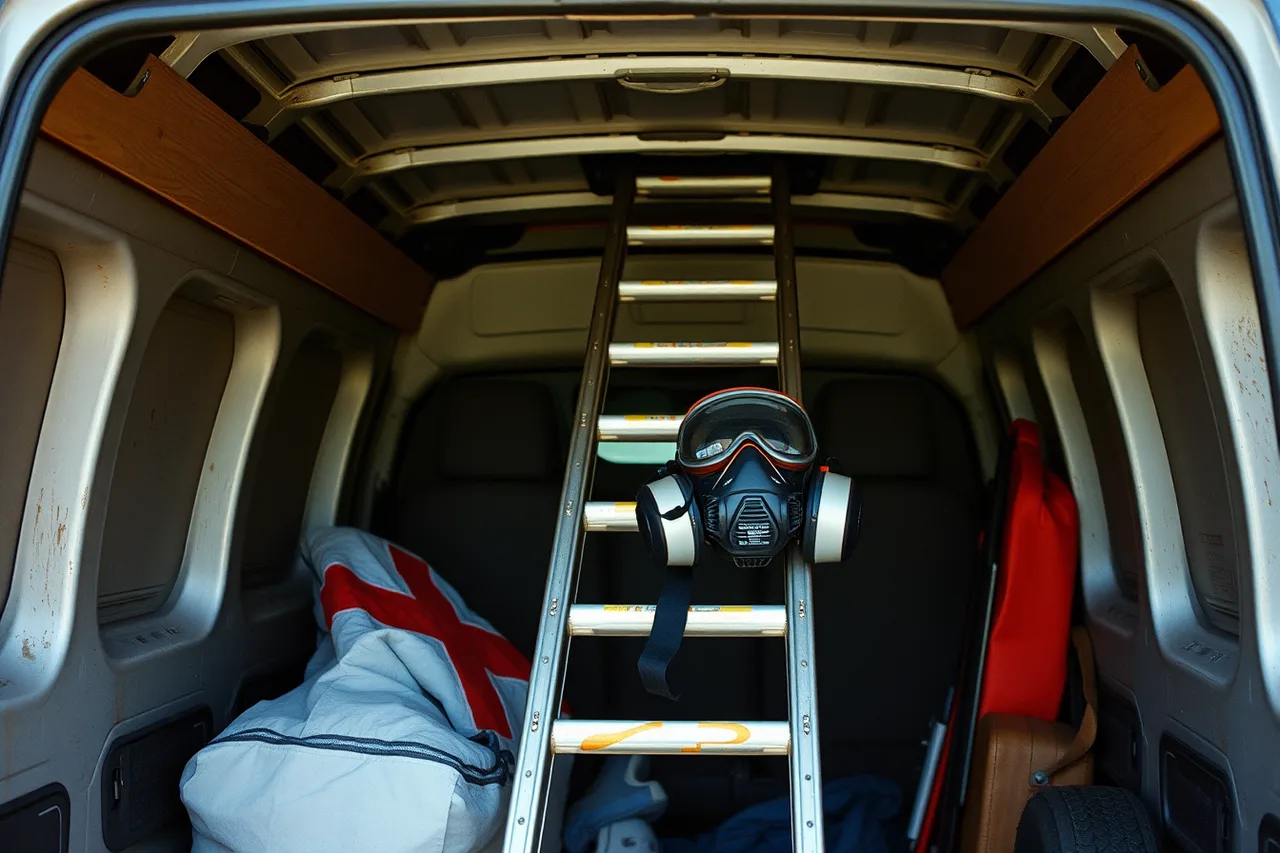
Residential work at height is the clearest case. OSHA sets out what is expected in its fall protection guidance for residential construction. Treat that as the specification for what is in the van and how it is used.
Hazard gear belongs in a program, not a purchase. OSHA's recommended practices for a safety and health program describe finding and fixing hazards on a schedule.
For a small outfit that means a short standing check: ladders and cords before the week, the next job's specific hazard before leaving, and a written rule about what nobody attempts alone.
The 3M 6502QL respirator and 3M SecureFit SF400 glasses in the kit are the minimum, not the ceiling. This gear does not compete with hand tools for space. If the van cannot hold both, the van is carrying the wrong hand tools.
Own, rent, or refuse
Three outcomes for any expensive item, and the call is usually clear once framed.
Own it when you reach for it often, when repeated rentals would pass its cost, or when it decides whether you finish or return. A Milwaukee 2719-20 Hackzall at about $160 is an own item if you cut pipe or demo weekly.
Rent it when the job that needs it appears occasionally and can be scheduled. A 10 in tile saw or a 1/2 in drain auger fits here. A rental also transfers maintenance and storage.
Refuse the work when the tool implies a skill or license you lack. That answer is more common than owners admit. Buying a tool to take on work you should not be doing is an expensive way to make a licensing problem physical. Scope questions go to your state contractor licensing board, not to a tool catalog.
Consumables are a system
Fasteners, anchors, sealant and blades leave the van a little at a time. Abrasives, tape and filler leave the van a little at a time. No single depletion is noticeable. The result is arriving with almost enough of something.
Run it with three parts. A written minimum for each consumable. A rule that whoever takes the last of something records it, at the moment, on a shared list. One restock trip at a fixed point in the week.
The list usually includes 1-1/4 in drywall screws, 2-1/2 in deck screws, 10 oz paintable caulk, 5 in sanding discs and utility blades.
The purchase records matter beyond the shelf. Tools and materials sit differently in your books, and the general obligation is set out in the IRS guidance on what kind of records to keep. Keep supplier receipts tied to the job or the restock, because a year later nobody remembers which.
Setting up so somebody else can work from it
A van organized around one person's habits cannot be handed over. That matters sooner than owners expect, because the first day the owner is unavailable is also the first day the system is tested.
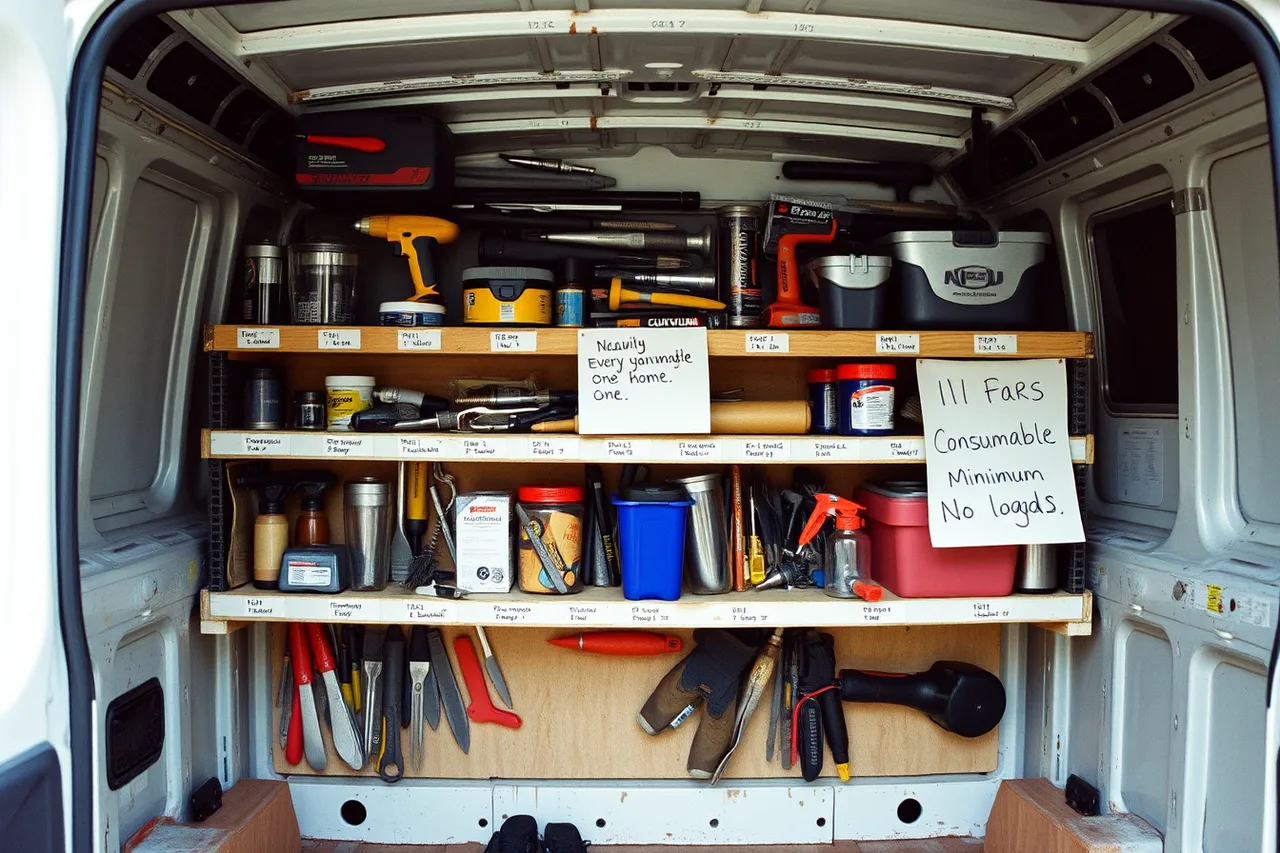
Three things make a kit transferable. Every item has one labeled home. The consumable minimums are written where the van is loaded, not remembered. And there is a photograph of each rack in its correct state, which turns a restock into a comparison rather than a memory test.
To fund this in stages, the Small Business Administration's business guide covers how equipment fits into a launch and financing plan.
Demand evidence that justifies the spend belongs in the local market reading.
Common questions
Should the first kit be bought all at once?
No. Buy what the first jobs required, then add the tools you found yourself borrowing or driving for. A kit assembled from a general list will contain items you never touch and miss the odd one your local housing stock demands.
How much should be spent on storage rather than tools?
More than feels reasonable at the time. Racking, cases and labeling return their cost in retrieval time and in fewer forgotten items, and they are the part of the setup owners defer indefinitely.
Does a bigger van solve the organization problem?
It postpones it. Space fills to whatever is available, and a large disorganized van has the same retrieval problem with a longer walk. Fix the system before the vehicle.
What about tools a customer offers to supply?
Politely decline, other than for something that belongs to their property. You do not know the condition or the history, the liability is unclear, and a tool failing in your hands on their job is a conversation nobody wants.
Which cordless platform should a new handyman choose?
DeWalt 20V MAX, Milwaukee M18 and Makita 18V LXT are common. Pick one, then buy bare tools. A starter drill and impact driver pair runs about $250 to $350 bare, or $350 to $500 with two batteries and a charger.
Do I need a multimeter on day one?
A Klein NCVT-3P and a Klein RT250 cover most outlet checks. A Klein MM400 multimeter at $50 to $70 is worth adding before you diagnose circuits.