Guides
How to judge handyman business insurance cover by risk
Handyman business insurance judged by the wording, not the price: which cover answers which risk, the exclusions that bite, and what to ask a broker.
Handyman business insurance is judged by the wording of the policy, not by the price on the quote.
What to take away
- Coverage lives in the policy wording. Two policies described with the same words can respond differently, and the certificate tells you almost nothing.
- Price is the last question. Establish which risks the business actually carries, then find out what responds to each.
- The exclusions that hurt a handyman business are predictable. They are listed below so you can ask about each one by name.
- What you are licensed and permitted to do interacts with what you are covered for. Those are not separate conversations.
- Nothing here states a premium, a limit, or a requirement. All three depend on your state, your work, and the insurer.
Start with the risks, not the products
Write down what could go wrong before anybody quotes you. Six things, roughly in order of how often they surface in this trade.
The six risks to write down are:
- A customer, visitor, or bystander is injured, or their property is damaged, by you or your work.
- Your completed work later causes damage, or a customer claims the work itself failed.
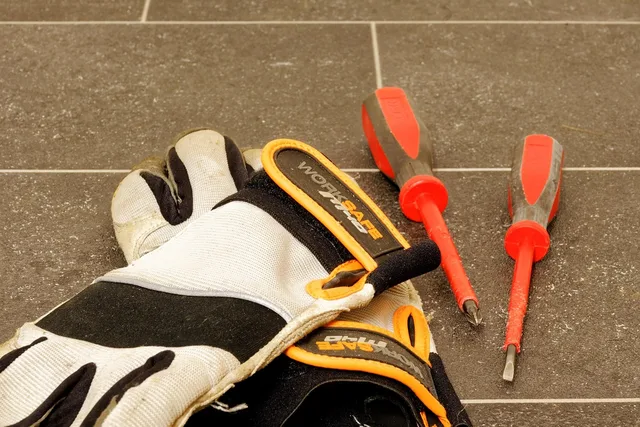
- Your tools and equipment are stolen or damaged at a job or in the van.
- Your van or truck is in an accident while it is being used for the business.
- You or a helper is injured or becomes ill because of the work.
- A customer claims your advice, inspection, or recommendation was wrong.
Six risks to write down first
- Work fails later and damages property
- Work injures somebody
- You damage customer property while working
- Tools or van stolen
- Somebody working for you is hurt
- Customer alleges work was not as promised
Those six are not covered by one product, and several of them are covered differently depending on the wording. Naming them first is what turns a broker conversation from a price comparison into a coverage conversation.
When you ask about wording, ask for the policy form and any endorsements by name. The base general liability policy is often written on an ISO commercial general liability form, and proof of cover is usually an ACORD certificate of insurance. A certificate confirms that a policy existed when it was issued; it does not confirm that the policy is still in force, that the limits are enough, or that your job is covered. The policy itself is regulated by your state insurance department, which is also where you can check an insurer or broker and complain if needed.
Which cover answers which question
The question it answers
- General liability
- Injury to a third party or damage to their property arising from your operations
- Products and completed operations
- Failure of finished work discovered after you left
- Tools and equipment
- Theft or damage to what you carry
- Commercial auto
- The vehicle used for the business
- Workers compensation
- Injury to somebody working for you
- Professional or errors cover
- Advice or specification that turned out to be wrong
What to ask about it
- General liability
- Does it respond to damage caused by the work itself, or only to damage caused while working
- Products and completed operations
- Is it included, and for how long after completion
- Tools and equipment
- Is it covered in an unattended van overnight, and at what basis of valuation
- Commercial auto
- Is business use declared, and does a personal policy exclude it
- Workers compensation
- What the state requires, and how a helper is classified
- Professional or errors cover
- Whether the work you do is treated as advice at all
That last row is the one owners dismiss. A handyman who tells a customer that a wall will take a mounting, and is wrong, has given something close to advice, and whether that sits inside general liability is a wording question.
Cover answers which question
Cover
- General liability
- Injury or property damage from operations
- Products/completed operations
- Failure of finished work after leaving
- Tools and equipment
- Theft or damage to what you carry
- Commercial auto
- Vehicle used for the business
- Workers compensation
- Injury to somebody working for you
- Professional/errors cover
- Advice or specification that was wrong
Question it answers
- General liability
- Damage by work itself?
- Products/completed operations
- Included? How long?
- Tools and equipment
- Covered in unattended van?
- Commercial auto
- Business use declared?
- Workers compensation
- State requirements? Helper classification?
- Professional/errors cover
- Is work treated as advice?
What to ask
- General liability
- Products/completed operations
- Tools and equipment
- Commercial auto
- Workers compensation
- Professional/errors cover
The exclusions that bite
Ask about every one of these by name. A broker who cannot answer them is not the right broker.
Exclusions to ask by name
- Work outside a license or permit
- Height restrictions and access methods
- Water and anything connected to a system
- Hot work involving flame or high heat
- Subcontractors and their own cover
- Faulty workmanship itself
Work outside a license or permit. This is the most consequential exclusion in the trade. If your policy will not respond to work you were not licensed or permitted to perform, then the licensing research is also an insurance decision. The board or office that matters depends on your state and trade—often the state contractor licensing board, such as the California Contractors State License Board, or the city or county building department that issues permits—so settle where the licensing line sits before you rely on the policy.
Height. Many policies restrict work above a defined height or exclude certain access methods. Establish where that line sits and whether your service list crosses it. It interacts with OSHA's fall protection guidance for residential construction, because a policy that expects compliant methods will ask whether you used them.
Water, and anything connected to a system. Escape of water is a common and expensive claim, and the exclusions around it are usually specific.
Hot work. Anything involving flame or high heat is frequently excluded or conditioned.
Subcontractors. If you use anyone else, ask what happens to a claim arising from their work, and whether they must hold their own cover.
Faulty workmanship itself. Many policies pay for resulting damage but not for redoing the defective work. Knowing which side of that line you are on changes how you price rework.
Commercial and public-facing premises. Work in a space the public enters can carry accessibility obligations, described in principle in the Department of Justice's ADA guide for small businesses. Whether your policy contemplates that class of work at all is worth asking before you accept it.
Tools in an unattended vehicle. Frequently conditioned on locks, alarms, or overnight location. Read the condition, because a claim will be assessed against it.
Why the price question comes last
Premiums depend on where you are, what you do, how long you have traded, your claims history, and the limits and deductible chosen. No page can quote you one, and any figure you read is a figure for somebody else's business. For your own benchmark, ask the broker for quotes at identical limits and deductibles, and use your state insurance department's consumer guides to check how the insurer sets them.
Make quotes comparable
- Get quotes on same limits
- Same deductible
- Same declared activities
- Compare exclusions, not totals
- Adjust deductible to what you can absorb
- Keep declared activity list accurate
What you can do is make the comparison meaningful. Get quotes on the same limits, the same deductible, and the same declared activities, and then compare exclusions rather than totals. A cheaper policy that excludes half your service list is not cheaper.
Two levers genuinely move the cost. The deductible, which is a decision about what you can absorb without disrupting the business. And the declared activity list, which should be accurate rather than optimistic: describing work you do not perform costs money, and omitting work you do perform costs the claim.
Describing the business accurately
Underwriting is built on what you told them. Describe the actual work, including the tools carried and the heights involved, and mention anything near a system you do not hold a license for, even if you only work adjacent to it.
Say who works with you and in what capacity. A helper's classification drives both workers compensation and liability, and the law decides it, not your agreement with them. That determination belongs with taking on a second pair of hands rather than with the insurance paperwork, but the broker needs the answer.
Then keep it current. Adding a service is a trigger to call the broker, in the same way it is a trigger to check with your state contractor licensing board or local permit office. That habit is the main thing separating businesses whose cover works from businesses that discover a gap at claim time, and it belongs in the same review as your licensing and registration requirements.
Your safety program is part of this picture too. OSHA's recommended practices for a safety and health program describe hazards being found and fixed on a schedule, and a business that can show it does that is in a different position after an incident from one that cannot.
The claim you can prevent with paperwork
Not every dispute is an insurance matter. Many are scope disputes, and those are prevented by a written scope with exclusions on the same page, plus photographs before and after.
Two habits reduce the number of arguments that ever reach a policy. Photograph the area before starting, including the damage you did not cause. And record any change to scope in a form that is not a memory.
Common questions
Do I need cover before the first job?
Yes, and before the first quote if that quote involves visiting a property. The exposure begins when you are on somebody's premises, not when you invoice.
Does my personal auto policy cover the van?
Usually not for business use, and the exclusion is standard rather than unusual. Declare the use. A refused claim on a vehicle stops every job at once, not one.
Is workers compensation needed for one part-time helper?
That is a state question with a state answer, and it also depends on how the person is classified. Ask the state workers' compensation agency—for example, the California Division of Workers' Compensation or the Texas Department of Insurance, Division of Workers' Compensation—and your broker, and record what you are told with a date.
Does having good cover change what I can accept?
It should not be used that way. Cover responds to what you were entitled to do, so it is not a route into work above your license. Nor does it substitute for the kit and the checks that keep the work safe; those belong in separate guides, such as the opening equipment checklist and the van and kit setup.